Showing posts with label food. Show all posts

Thursday, July 03, 2014

The Challenge of Conviction

"It's hard to have conviction in a relativistic culture."

That phrase has been rattling around in my head for the past several weeks.  It started at the end of May when I read this very frank, very jarring opinion column about gun violence and gun control, "There is no catastrophe so ghastly that America will reform its gun law," by Tim Kreider. At one point he wrote:
If gun laws are ever going to change in this country, it'll have to be because people like me, people who care except not quite enough, quit their bitter impotent griping and actually do something about it. We care in the way that carnivores care about the screaming in slaughterhouses or that pro-war voters care about families accidentally blown apart in Iraq. Which is to say, sorta — just not enough to change our minds or habits or do anything hard or inconvenient.  (Italics mine)
 "We care in the way that carnivores care about the screaming in slaughterhouses ... which is to say, sorta -- just not enough to change our minds or habits or do anything hard or inconvenient."

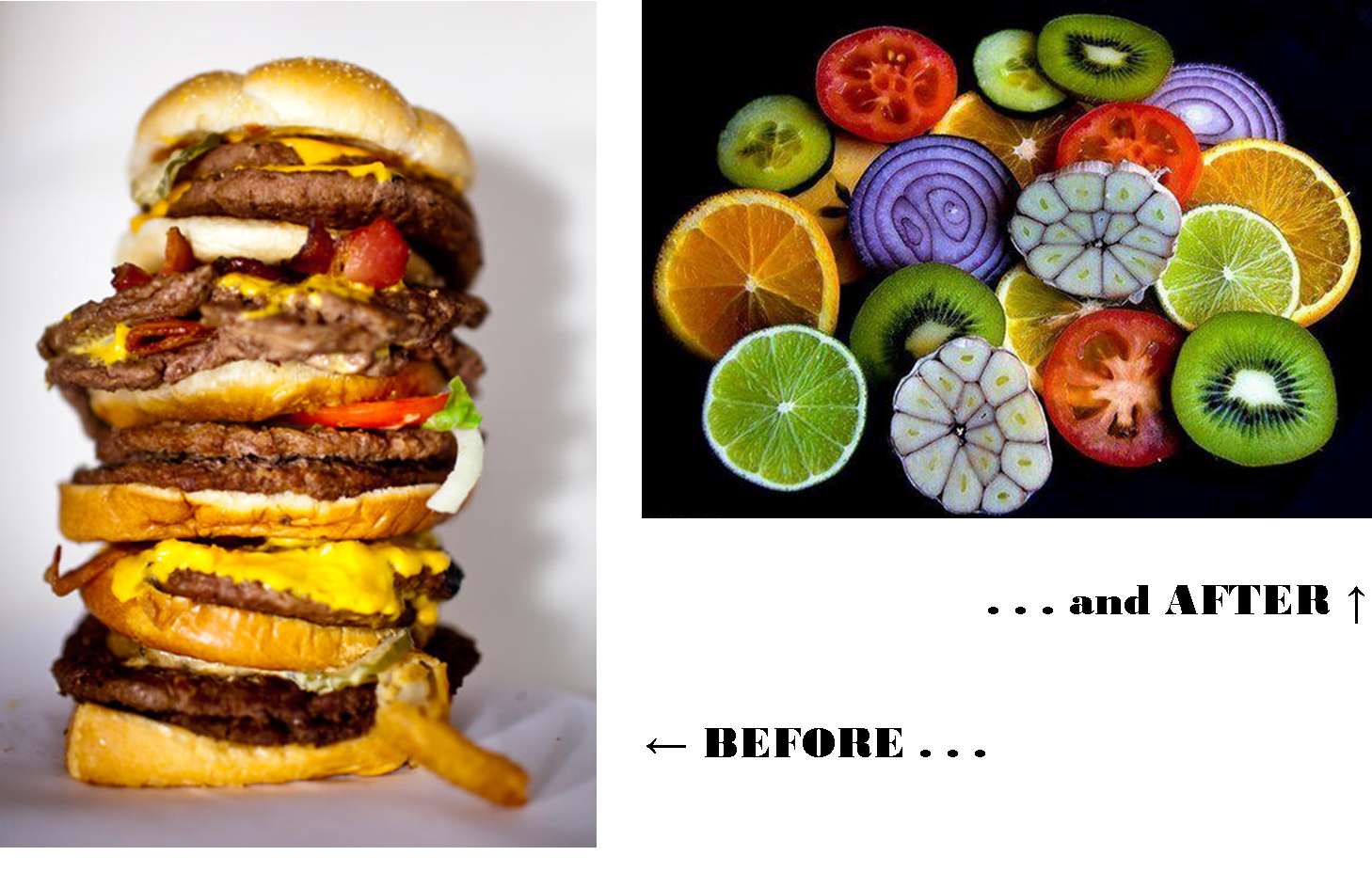
I've seen Food, Inc., King Corn, Hungry for Change, Dirt!, and a host of other films that quite convincingly show the dangers and the devastation of the standard American diet (which is "SAD" indeed).  There is no doubt that the way the dominant culture encourages us to eat, and the way so many of us have become addicted to eating, is not only unhealthy for our own body systems but also for the planetary system we are a part of.  The link between the choices individuals make around eating and issues of social justice and ecological degradation is undeniable.  Whether you've decided to adopt a diet that's vegetarian, vegan, nutritarian, flexitarian, paleo, or something else, it seems clear to me that we can all agree that the way the majority of us have been taught to eat, and are encouraged to eat, is fundamentally and essentially unhealthy for everyone and everything concerned -- except the bottom line of the food industry.  It's one of the reasons that the Unitarian Universalist Association has an initiative concerning Ethical Eating.

So ... I know all of this.  And I care.  I do care about the environmental and economic devastation that is directly linked to the way -- and I'll get personal here -- the way I eat.  I care about animals, and I care about our waterways, and I care about the way antibiotics are such a part of our diet now that the problem of antibiotic resistant bacteria is exacerbated, and I care about the nutritional gap that mirrors the income and education gap, and I care about the epidemic of obesity and the lowering of life expectancies, and I care about the possible unimagined consequences of genetically modified crops ...   I care about all of this, but if I'm honest I care about it ... sorta -- just not enough to change my mind or my habits or do anything hard or inconvenient.

So I've been thinking about all of this for a while now, and I keep coming back to that phrase:  "It's hard to have conviction in a relativistic culture."

It's easy for folks who see the world in "black & white" to do the hard and inconvenient thing.  Something is right or it is wrong, and if it's wrong it's wrong.  But when you see the world in shades of grey -- or, even more, in technicolor -- then it's not so easy. There's a line in that great Buffalo Springfield song, "For What It's Worth" -- "nobody's right if everybody's wrong."  The reverse is true, of course, too -- if nobody's wrong, then everybody's right.  And when everybody's right -- or, at least, potentially right or right "in a certain sense" -- then it's awfully hard to get motivated to do the hard and inconvenient thing.

Now I'm not saying that "black & white" thinkers can easily do those hard and inconvenient things.  (Okay.  I did say that, but I really meant that it's relatively easier ...)  And I'm not saying that it's impossible for us technicolor dreamers to do the right thing.  I'm just saying that it's a challenge.

And maybe this is just me trying to justify laziness.  That's certainly a possibility.  Yet I do think that there's something in the liberal penchant for trying to see the value in every position that makes it hard for us to take a stand against any of them.  I mean, really take a stand ... to do the hard and inconvenient thing.

This month, while I'm taking both vacation and study leave, I am going to try to change my eating habits to bring them more in line with my values.  See what I did there?  The way I defaulted to the safety of qualifiers?  "I'm going to try to change my eating habits to bring them more in line with my values"  Why not just say it with a strong declarative --  "I'm gong to change my eating habits to bring them in line with my values."  Of course, if I say it so declaratively, I might let myself down ... or let someone else down.

Because this is going to be hard.  I am physically, psychologically, and emotionally addicted to SAD.  I am culturally conditioned to default to convenience rather than conviction.  Virtually everything around me is arrayed to get me to fail and give up.  So it's possible that I will.  Yet I definitely will if I don't try.  Perhaps you might consider joining me?

Pax tecum,

RevWik


Sunday, January 27, 2013

T Minus 5 and Counting

This post is adapted from my January 2013 "Words of Wikstrom" column for the monthly bulletin of the Thomas Jefferson memorial Church - Unitarian Universalist.  And while it is clearly directed toward the members and friends of the congregation I serve here in Charlottesville, Virginia, it's invitation is open to anyone, anywhere, who'd like to join.

As some of you know, a few months ago I got very excited about something. And it all started with a movie.  I’d gone to see my new doctor. After she took my health history, and looked over my various numbers, she said to me, “I’m not saying that this describes you, but I’d like you to watch a movie.  It's called Fat, Sick, and Nearly Dead.” I did, and it began to change my life.

The movie is about an Australian man – Joe Cross – with a severe auto-immune disease and who could fairly reasonably be described by the movie’s title. He came to the United States – home of all of his favorite foods! –to regain some control over his health. He began by embarking on a 60-day juice fast. That’s right. For 60 days he consumed nothing other than freshly made vegetable and fruit juices. (He’d consulted with a doctor and a nutritionist before beginning, of course, and was monitored regularly through the fast.) He traveled across the country, and along the way he encountered other people who needed to make changes in their lifestyle who also decided to kick-start a rebooting of their systems, if you will, by an extended juice fast.

After watching the movie I borrowed a juicer that a friend had in her basement and began what would turn out to be a 30-day fast. In that time I lost a little over 50 pounds, my blood work improved dramatically, and both my mood and my energy increased to levels I hadn’t known since junior high if, in fact, I’d ever known them before.

Many folks noticed these changes. Some took on their own juice fasts of various lengths. Others took other approaches – increasing the amount of vegetables they eat, for instance, or decreasing the amount of heavily processed foods consumed on a daily basis. Others said that it had gotten them to at least think about the relationship they had with food and eating.

I didn’t stop with watching one movie. I’ve now seen such films as Food, Inc.; Supersize Me; Forks Over Knives; FoodMatters; Fresh; Dirt!; Processed People; Hungry for Change; King Corn; PlanEAT; and HBO’s The Weight of the Nation among others. I read the works of doctors Mark Hyman, Joel Fuhrman, and Alejandro Junger. I am currently enrolled in the Nutritional Educator’s training program in Dr. Fuhrman’s institute, in order to deepen and expand my understanding about nutrition. And I also looked at how other ministers and congregations have worked to respond to the links between food and faith, health and wholeness . . . the interconnectedness of the whole body-mind-spirit-ecosystem-social justice matrix.

Yes. I became something of an evangelist. I do see this as part of a bigger picture, the kind of Big Picture I think our churches should be working on. Because the truth is, there are a lot of sick people in our country . . . in our county . . . in our congregation. Sick in body and in mind and spirit. We are a sick people in a sick culture on an increasingly sick planet. The more I learned, the more embarking on a Health and Wholeness Initiative here at TJMC has been making more sense.

This coming Friday -- February 1st -- I will host a public showing of the film that, for me, started it all -- Fat, Sick, and Nearly Dead.  I am also in the process of buying for the church ten Breville juicers -- the kind Joe uses in the movie!  And I am challenging . . . no, inviting . . . anyone who wishes to to join me in a fresh vegetable and fruit juice fast for the month of February.  Not quite thirty days, but long enough to break some of the bad habits/ingrained triggers that many of us have with food -- especially the so-called "Standard American Diet" (aka, SAD). 

For so many of us eating has more to do with emotional self-regulation than it does with providing nutrients to our bodies.  We eat because we're bored; we eat because we're upset.  We reward ourselves with food when something goes really well; we comfort ourselves with food when things go badly.  When we need an energy boost we eat, and when we want to chill out we do so with some of our favorite foods.  A brief, intentional fast is one way to break some of this unhealthy habituation when it comes to eating. 

Another thing a juice fast can do is give the body a quick infusion of high quality nutrients.  Yes, there is debate as to whether or not juicing is healthy.  Some argue that by removing all of the insoluble fiber from our diet we are doing our body harm.  And long term this could be true.  (And please note that for some people this would be true in the short term, as well.)  For most people, though, the benefits of a temporary and well-planned juice fast far outweigh the intentional harm.  (Pun intended.)

And what are those benefits?  Well, the break in our normal eating pattern, as already mentioned.  And few of us eat anywhere near the amount of fruits and vegetables we should, and these foods are filled with micro-nutrients our bodies desperately need.  It takes a lot of veggies to make a juice, far more than most of us are likely to eat regularly, so juicing is a way of giving a "turbo-charged" infusion of the phytochemicals and other nutrients we generally lack.  In so doing, we begin to rebuild our body's own innate ability to heal itself . . . something that the Standard American Diet has seriously damaged in many of us.  It can also re-tune our taste buds.

And so, this Friday, with the showing of Fat, Sick, and Nearly Dead and the launch of the month-long juice fast, the TJMC Health and Wholeness Initiative will be officially launched.  Is this the beginning of tyrannical food police trying to guilt all of us into eating rabbit food? Lord I hope not. But is this the next step – building on a history in the congregation and our wider Unitarian Universalist movement – in taking seriously our responsibility to our-selves and one another to care for the health of our planet, our communities, and ourselves? I most certainly hope so.  I like to say that it is an invitation for us to make as "free and responsible search for truth and meaning" in our food choices as we do in other aspects of our lives.  What we eat affects not only our own health, but the health of our communities, and our world.

Two caveats.

First, please consult with your doctor before engaging in any kind of fasting program.  Even though a short and well-thought-through vegetable and fruit juice fast will provide most people with all the nutrition their bodies will need, not all of us are the same.  Our body's have different needs, and our various health conditions can cause us to be more or less vulnerable.  If you think your doctor would simply be horrified at the thought of something like this . . . I can recommend my doctor who has said she would be willing to see anyone who wanted to see a doctor both open and receptive to this kind of thing.

Second, please, please do not jump on any particular band-wagon too quickly.  Advocates for various understandings of what makes for a healthful diet can become as fundamentalist as advocates for anything else.  Some will say NO meat.  Others will say LOTS of meat.  Each can be absolutist in their declarations.  I encourage us to engage this Health and Wholeness Initiative with what we might call a Unitarian Universalist attitude -- seeking the truth both responsibly and freely and as it resonates with our own lived experiences.  I like this passage from the writings of an MD named Mark Hyman:
"It’s time to focus on the broader discussion…people shouldn’t be eating industrialized foods—period. If you choose to eat meat, you should be wary of where it comes from, what it’s fed, how it’s raised. For the average American, animal protein is a real problem. For the country and the globe, animal feedlots are a real problem. I think that’s the bigger issue.

People have fanatical beliefs about diet, but the truth is that you can be healthy on a multitude of diets. If you look at the research, you can argue both sides, but are saying the same thing. I think we are over-arguing the issue instead of looking at our commonalities, which means that we are missing the real issue. The real issue is that we need to be off our of industrialized diet."
So . . . if you're interested in a learning about one approach to "rebooting" your internal systems back to their more naturally healthy state, come by the sanctuary this Friday, February 1st, to watch Fat, Sick, and Nearly Dead at 6:30 pm.  (Or plan to watch it at home on Netflix or on the Fat, Sick, and Nearly Dead web site.)

If you're interested in taking my up on my invitation try joining me in a month-long fresh vegetable and fruit juice fast, come to church this Friday evening (or check in with me before then).  We'll have ten juicers to loan out (first come, first served), and can give you information about where you could get your own.  There'll even be a juicing demonstration following the movie and a hand-out with some delicious juice recipes.

And if you're interested in trying the juice fast, but don't feel like you could do a whole month, there'll be a "second wave" starting on Wednesday, February 13th.  This one will also start with a showing of Fat, Sick, and Nearly Dead, this time at 7:00 pm.

And feel free to follow this blog.  During this month I intend to focus on how the fast is going -- for me and for the community -- as well as on providing information about nutrition and health (personal, communal, and global) such as book and movie reviews, links to other web sites, and discussions of various issues in this unfortunately all-too-complex debate.

Today is "T minus 5 and counting."  I don’t know where this will take us, but I didn’t know where settling down in front of my TV a few months back would lead, either. I still don’t. But I’m excited to find out.

In Gassho,

RevWik

PS -- if you're interested in learning more about the involvement of the wider Unitarian Universalist movement in the issue(s) of food check out the links on the UUA's Ethical Eating:  Food and Environmental Justice page.

Tuesday, July 31, 2012

You Can't Go Home Again

Okay. 

<Deep Breath>

I figure that if I'm going to write about the highlights, the successes, that I need to be equally open about the setbacks and heartaches.  A one dimensional picture is hardly useful in trying to describe a three dimensional world, and nothing is as easy as it sounds when you only describe the times when it's easy.

<Deep Breath>

Over the past couple of weeks I've been struggling.  My reasons are personal and specific, but they'd be recognizable to anyone who's ever read the Big Book of Alcoholics Anonymous, or ever attended any kind of 12 Step meeting, or known anyone with addiction issues.  Really they'd be recognizable to anyone who's ever done any kind of deep spiritual exploration and discovered anything important about how the human mind and heart work when operating under the control of the small-s "self" rather than the large-s "Self."

The reasons aren't that important; the results, on the other hand, are.  I ate some junk food.  Actually, I ate a lot of junk food.  Had some McDonald's for lunch one day.  Then Burger King for breakfast the next.  I wolfed down a couple of jumbo hot dogs.  Consumed some pizza.  Some fried chicken.  I even ate a breakfast of hash, home fries, biscuits and gravy, and sausage -- both links and patties.  In other words, I stepped off of the path of my new way of eating and resumed old habits that have been causing me harm.

The good news -- and I do like to try to find the good news -- is that Thomas Wolfe was right . . . you can't go home again.  After clearing up my system and establishing new patterns as I've been doing for the past several months I found that I couldn't return to my old ways of eating.

I could, of course.  Obviously I could, because I did.  What I mean is that I discovered in a newly clear way that it's really no longer an option for me.  What had not that long ago been accepted parts of my life were no longer acceptable:
 
~ My brain essentially shut down. The "brain fog" was so dense that my short term memory was shot and my ability to think ahead was nearly non-existent. I couldn't make connections, and struggled to put words together in any kind of coherent way.

~ And all I wanted to do was sleep. Not only was my brain filled with fog -- or, more accurately, smog -- but my body was weighed down. My arms and legs felt heavy, leaden. It was all I could do to get myself out of a chair. And my sleep was not restorative in the least -- I woke up each morning even more tired than I'd gone to bed the night before.

~ My sinuses began to fill up, and my whole body began to itch -- especially my scalp and my back, but my arms and legs, too. My chronic athlete's foot condition raged again. I started feeling hot in cold rooms, and cool in hot ones. I began to sweat again, easily and profusely.

~ And in case it's not intuitively obvious, my depression came back with a vengence. Negative self-talk regained the ascendency.

And all this after just a few days of eating junk again!  Admittedly, I ate a fair amount of junk during those few days, but there was a time when I ate fast-food for at least two out of three meals most days and easily downed a 2-liter bottle of coke and a whole pizza without giving it a second thought.

If I had any doubt that the way I was eating was harming me, and that the changes I'd been making were helping, the response of my body and brain to this last binge removed it.  The cause-and-effect is so incredibly clear.  And having had something of a break from these mental and physical symptoms, having experience another way, I find that I cannot stomach (excuse the pun) the thought of letting myself go backwards. 

And, so, the juicer is back in service again.  And I'm discovering (again) how good it feels to think and move and really live.  I'm reminding myself, and being reminded, of the addage:  There is no such thing as junk food.  There is food and there is junk.  And while I cannot say with any degree of certainty that I'll never slip like this again -- in fact, I can say with more than a little certainty that it's likely that I will! -- I do now know that I will never again make my home in this unhealthy place.

In Gassho,

RevWik

Wednesday, July 11, 2012

We Need Not Eat Alike . . .

One of the most famous utterances in the Unitarian tradition comes from the 16th century.  It was said by Francis Dávid—or, as he is known in his own language, Dávid Ferenc.  In his lifetime he was a Catholic, who converted to Lutheranism, who converted to Calvanism, who converted to Unitarianism. And I don’t mean that he did a lot of church shopping—he was a rector or priest in each of these denominations, and rose to the rank of Superintendent (which is like a Bishop) in three of them.  And he became the founder of the first institutional Unitarian church in history. 

He once said -- and this isn't the "famous utterance" I'm talking about -- In this world there have always been many opinions about faith.”

But the quote I'm thinking about, and the one that I've modified for the title of this post, is this:


"We need not think alike, to love alike."

In today's increasingly polarized world this notion is such a powerful corrective.  We need not think alive, to love alike.  We need not share worldviews to recognize our common humanity and treat each other like family.  I could even go so far as to say that we need not agree about everything to work together on those things we do all care about.

This idea is applicable in so many places today.

I started thinking about all of this (again) during some recent conversations I've been involved in (on FaceBook and in the "real" world) about dietary plans.  It seems that "in this world there have always been many opinions about nutrition," and folks quite often are ready to defend their own particular opinion against all challenges.

And one of the things I've noticed (and yes, again) is that it seems that a default method of defending your own opinion is to denounce and deride any others.  Paleo people declare that Vegans don't get it.  And juicers act as though non-juicers are imbeciles.  And it seems that few people are willing to recognize that we need not eat alike to love alike.  And we need not agree about everything to acknowledge that there's a fair bit we do agree about.

We are meant to eat food.  It provides the building blocks which makes everything possible -- every movement we make, every thought we think.  As I watched my babies grow into toddlers I thought of how amazing it is that they were turning baby food into longer arms and legs and ever more connected synapses.  The maxim "you are what you eat" is quite literally true. 

Yet much of what is included in the typical western (and, perhaps particularly, American) diet is no longer really food -- it is overly processed food-like product.  And it's worth noting that providing nutrition to people is not the primary purpose of what, for want of a better term, I'll lump together under the name "The Food Industry."  Its primary purpose is providing profits to its shareholders.  And one of the best ways to do this is to create nutrient-lean, calorie-dense food-like products with lots of additives that are cheap to produce and which keep you coming back for more.  (Some of the common additives in many processed foods are known to be as addictive as cocaine!)

We've seen this in the behavior of the tobacco industry -- an intentional manipulation of the chemical components of cigarettes so as to make them more addictive.  It is also clear that many food manufacturer's have been doing the same thing -- increasing the fat, sugar, and/or salt content (and inserting additives like MSG) so as to make us crave more of their products.  And by (again, intentionally) reducing the nutrient content relative to the calorie count they've created products that feel filling when consumed, stimulate all sorts of pleasure receptors, but do not actually provide the necessary nutrients for the body and so virtually guarantee that we'll keep eating.

So while we're designed to eat food, the typical American diet consists primarily of non-food substances.  This is something like providing to the construction company that's building your house not wood, stone, and metal, but wax paper, styrofoam and aluminum foil.  These things are kind of like those appropriate building materials, but not really a substitute.

And not only are the heavily-processed food-like substances not good for us, they are demonstrably bad.  Not only are they not particularly beneficial, they are actually harmful.  These things have been shown over and over again to be primary contributors to our epidemic of obesity, diabetes, coronary heart disease, various cancers, and a host of other serious health problems that are plaguing our lives.  And these are just some of the so-called "physical" repercussions.  These same contributors have been shown to play a role in a host of so-called "mental" health issues as well -- such as depression, ADD, autism, etc.

And now, as always, there are many opinions about nutrition.  And people willing to defend their particular opinion.  But when we at all costs defend the details of our particular plan, are we adding to the confusion that leaves the majority of people confused about what to do when it comes to eating?

Michael Pollan -- the author of such books as The Omnivore's Dilemma, and In Defense of Food -- has written a book called Food Rules in which he tries to cut through the various specific details of the multitude of plans that compete for our attention and to offer some simple, common sense "rules" to guide a rational response to our national need for change.  Here are some of my favorites:
  • Don't eat anything your great grandmother wouldn't recognize as food.
  • If it came from a plant, eat it.  If it was made in a plant, don't.
  • It’s not food if it’s served through the window of your car.
  • It’s not food if it’s called by the same name in every language.  (e.g., Pringles, Big Mac)
  • Don't eat cereal that changes the color of your milk.
  • Don't eat foods with ingredients you can't pronounce.
And then of course there's this classic, perhaps my favorite:
  • Eat food.  Not too much.  Mostly plants.
We need not eat alike to love alike.  We need not eat alike to live alive.  But it sure seems increasingly clear that most of us can't keep eating the way we do and continue to love, or live, at all.

In Gassho,

RevWik

Monday, May 14, 2012

Longing or Gratitude

The other night I watched TV for the first time in a long time.  No anti-boob-tube righteousness in that hiatus . . . I've been busy.  But I did get a break the other night, and I tuned in MythBusters, and . . .

I was amazed at all commercials for food!  It seemed as though food were being shoved in my face over and over again with a break only to tell me about how there was more food in another room somewhere.  I was reminded of an experience I'd had at a wedding reception -- after half an hour or so of eating at the most splendiferous buffet you could ever imagine, it was announced that the appetizers were finished and it was time for us to go in to dinner!

For anyone who's not been following this blog, yesterday was Day 30 of a fresh vegetable and fruit juice fast.  (See the movie Fat, Sick, and Nearly Dead to get an idea of what and why.)  And today is 36 days since processed foods, fast foods, sugar, or the like have passed my lips.  So maybe you can imagine the reaction I was having to this visual smorgasbord.

Or maybe you can't.  Maybe you'd imagine that after a month of eating (drinking?) really healthfully all of this excess would have been unpleasant.  If so, you'd be wrong.  A Double Quarter Pounder from McDs?  Heaven.  A pepperoni pizza which cheese sticks for a crust?  Seventh Heaven!  I watched each and every image of food-like product that was being flashed before my eyes and I coveted it!

And what made this longing even worse was the fact that I know the changes I am making in the way I eat are permanent.  I am not juice fasting so that I can return to eating poisonous food facsimiles.  I am trying to heal my body and save my life.  So I intend to finish this fast and switch to a nutrient-dense, whole-food, plant-based diet.  As of this moment I think I'll be following the kind of diet advocated by Dr. Joel Furhman (among others), author of such books as Eat to Live and which he describes in great detail at his website.

But this means no more ribs.  Ever.  No more KFC.  Ever.  I will never taste the fabled deliciousness of Pizza Hut's Royal Crown Pizza.  Even if it ever gets to the United States.

I love popcorn shrimp.  (Heck, I like any kind of shrimp!)  I love the aroma of barbecuing meat.  And I could look at the changes I'm trying to make from a perspective of deprivation:  I could focus on all of the things that I love to eat that I will never eat again.

Or, I could look at this from a perspective of opportunity:  there is a world  of amazing tastes out there just waiting to be discovered!  Vegan food; raw food; unbelievably tasty things that I've never eaten because instead I've been filling up on fast food.

How do you look at your life?  Do you focus on the things you don't have, on your longings?  Or do you celebrate the things you do have, your gratitude?  This choice makes all the difference.

In Gassho,

RevWik

Thursday, April 26, 2012

Hunger


The Vietnamese Buddhist teacher, poet, and peace activist has said that the United States is a land of "hungry ghosts." These are mythic creatures who have huge bellys and pinhole mouths; they can never satisfy their desires.  Their cravings.  Their hunger.

Today is Day 13 of my first long-term all-juice fast.  (And it's 18 days since I last had fast food, soda, processed foods, red meat, sugar, and wheat!)  I'm learning something about hunger.  About craving.

As I cook dinner for my family I suddenly realize that whatever it is that I'm cooking -- last night it was rotissery chicken, alfredo noodles, and salad -- is my all-time favorite food in the world and that without a little taste of it I will dissolve into nothingness like the Wicked Witch when faced with water.

And when I'm getting ready to leave a nighttime meeting at church I become accutely aware of how delicious the Quarter Pound Big Bite hot dogs taste at the 7-11 I pass on the way home.  There is no finer cuisine on the planet, and my body is telling me that I desperately need something from the oversized, overprocessed meat-like food group in order to maintain optimum health.

One of the things I keep trying to teach my kids -- now 10 and 8 -- is the difference between "needs" and "wants."  "I need a new beyblade," one will say.  "No," I'll reply, "you want a new beyblade.  You need food, clothing, shelter, and love."  I think it's part of my parental duty to pass on such important information.

And yet I am discovering anew just how much I need to take my own life lessons to heart.  In this immediate instance it's food -- I need some crackers!  I need something to chew on!  But it's becoming clear to me (again) how often I make the same mistake my kids do.
  • I need more financial security.
  •  
  • I need this or that person's respect.
  •  
  • I need to attain this or that level of professional achievement.
  •  
  • I need . . .
Through the process of this juice fast I am learning to differentiate between my food needs and my food wants.  And when I'm able to do this I'm also able to see that I actually want to be healthy more than I want the taste of a Double Quarter Pounder with Cheese.  Needs must be attended to; wants can be weighted against other wants and decisions can be made.  We have at least some measure of control over our wants.

This is one of the great gifts of fasting -- whether it be a food fast, a media fast, a fast from negative-thoughts.  It can help us remember the difference between wants and needs, and help us (re)gain control of our living.

In Gassho,

RevWik

Saturday, April 21, 2012

Learning Something Every Day

About a month ago my doctor suggested that I watch a movie.  It was called Fat, Sick, and Nearly Dead and it may well have been the catalyst for changing my life.  (I am currently on day seven of what I hope to be a thirty day "fast" of only freshly made vegetable and fruit juice.)

As part of my regimen to keep me inspired I've been watching other movies as well:
Each of these films has its own strengths and weaknesses.  I am sure that people who know more about nutrition and molecular science can quibble about various specific aspects.  (I have a feeling that that'd be especially true in Food Matters.)  Yet all of them together confirm what seems to me to be a very important message --

The food we eat today is literally different from the food we ate 50 or 100 years ago.  And I don't just mean the kinds of foods, I mean that the foods themselves have changed.  The nutritional quality has changed.  In some cases the molecular make up has changed.  And these changes have not been for the better.  The food we eat today is not as healthy for us -- and in many cases is now seriously unhealthy.  At the most extreme, the food we eat today is poisoning us.

And, so, all four of these films calls us to a different way of eating -- a whole foods, plant based diet.  The science is pretty convincing, so why aren't more people responding?


In Gassho,


RevWik