Monday, September 16, 2013

When Horrors Come Home

This is the sermon I preached at the Thomas Jefferson Memorial Church - Unitarian Universalist in Charlottesville, Virginia on September 15th, 2013.  You can listen to the podcast to get the aural experience.

The Opening Words for the service were taken  an article in The Atlantic written by Andrew Cohen It is titled, “TheSpeech That Shocked Birmingham The Day AfterThe Bombings.”  We read the second paragraph of Cohen's introduction and then read nearly all of Charles Morgan, Jr.'s speech.  It is worth it to read the article in it's entirety -- Cohen does a masterful job of weaving Morgan's speech with his own contextualizing commentary.  A very powerful piece.


* * * * *

This isn’t going to be a particularly cheery sermon this morning.  I want to warn you in advance.  Not a lot of laugh lines in it; I know it’ll make some of us squirm.  It did me as I researched and wrote it.  Cried some, too.  Might still.  I just want you to be prepared.
Let’s say that it’s 9:00 in the morning.   People of all ages are coming in the Edgewood Lane door, but it’s largely families with kids.  And let’s say that it’s the morning of a youth-led service, so the energy is particularly high.  Parents are feeling proud; kids are excited.  It is, in short, a pretty ordinary morning.
And then an explosion rocks the building.  It’s like an earthquake, but bigger and louder.  The hall and the sanctuary almost immediately fill with smoke and dust.  All of the windows shatter.  That wall, right over there, collapses, and we can see that the Edgewood Lane door is gone.  So is part of the parlor.  And the steps outside.
We quickly learn that four of our children were killed in the blast.  Another lost one of her eyes.  Another twenty were injured.  In time we learn that one person – and as many as four people -- had planted up to fifteen sticks of dynamite in the bushes by those stairs.  They’d known that families used that entrance.  They’d wanted to kill our kids.
What would you do?  If that happened here, what would you do?  Where would you go?  Who would you be looking for in that chaos?  What would you be feeling?  What would you do?  What would you want to do in response?
Fifty years ago today that scene played out almost exactly at the 16th Street Baptist Church in Birmingham, Alabama.  It was 10:22 in the morning.  It was a youth Sunday, and the children were coming up from their Sunday School classes preparing to lead the adult congregation in an exploration of the theme, “The Love That Forgives.”  Not all of the windows shattered – a stained glass window showing Jesus leading a group of children survived.  But it was damaged.  Jesus’ face had been blown out.
And four little girls lay dead.  This morning, in churches and other places of meeting all over this country their names are being read aloud:  Addie Mae Collins (age 14), Denise McNair (age 11), Carole Robertson (age 14), and Cynthia Wesley (age 14).  (Addie Mae Collins’ younger sister, Sarah, was the child who lost one of her eyes.)
This was not the first act of violence in Birmingham.  The city had earned for itself the nickname “Bombingham,” because of the number of times African American institutions had been bombed since World War I, and one neighborhood in particular --  made up almost exclusively of upper-middle class, African American homes -- had been dubbed, “Dynamite Hill.” 
Nor was this the first church to be bombed in Birmingham.  On Christmas in 1956, dynamite was placed where the Bethel Baptist Church and its parsonage connected.  The minister, the Rev. Frederick Lee Shuttlesworth, had his bed in that corner of his bedroom, and although the blast destroyed much of his home, he emerged unscathed.   When told by a policeman who’d responded to the scene, and who was also himself a Klansman, that he, Shuttelesworth, should leave town, the Reverend replied that he hadn’t been saved so that he could run.
A year latter, Shuttlesworth and his wife Ruby attempted to integrate the previously all-white public school system by enrolling their own children.  A mob of Klansmen attacked them.  The police never responded.   One of the men who attacked the Shuttlesworths was Bobby Frank Cherry, who six years later would place the dynamite under the steps of the 16th Street Baptist Church. The mob beat Shuttlesworth with chains and brass knuckles in the street, and somebody stabbed his wife . Shuttlesworth drove himself and Ruby to the hospital where he told his kids to always forgive.
The theme, 50 years ago today:  “The Love That Forgives.” 
The 16th Street Baptist Church was the headquarters, if you will, of what came to be called the Birmingham Campaign, that spring and summer in 1963.  It was conveniently located across the street from Kelly Ingram Park, and made for an easy walk to downtown for nonviolent action.  Kelly Ingram Park, some will remember, is where Commissioner of Public Safety Eugene “Bull” Connor issued his infamous order to turn fire hoses on protestors – protestors who included young, elementary-aged children, and fire hoses that were set on a pressure that could strip bark from a tree and pull bricks out of their mortar.  The thousands of young people who participated in the so-called Children’s Crusade met up at the 16th Street Baptist Church.
It was the Rev. Jim Bevel, who at the time was the Director of Direct Action and Director of Nonviolent Education for the Southern Christian Leadership Conference, who had had the brainstorm to actively involve young people in the campaign.  After the bombing at the church, and the deaths of Collins, McNair, Robertson, and Wesley, Bevel said that he thought the intent of the bombing was to say (and I’m paraphrasing here), “If you’re going to use your kids against us, we’ll use your kids against you.”  He’s gone on record as saying that he gave serious consideration to leaving the movement after the bombing – not because he’d been frightened off, or had become demoralized, but because he’d wanted to hunt down the people who were responsible and kill them himself.
If that happened here, what would you do?  What would you be feeling?  What would you want to do in response?
This week also saw the anniversary of another heinous terrorist attack – the attacks of September 11th, 2001.  Nearly three thousand people died when madmen turned planes into bombs, bombs packed with human shrapnel.  And on Wednesday, those names were read.  Over the years I’ve read them myself from pulpits I’ve served – carefully recalling the name of each and every one.  It takes hours.
And one of the things that made those attacks so horrible was that they came quite literally out of the blue.  No one expected such a thing to happen, and that morning had been so beautiful.  I looked it up yesterday and it seems that it was lovely here that day; I know that it was one of those days that you could hardly help feeling good on where I was that morning in Maine; and my friends in New York have all said the same.  We were all feeling so good . . . until we weren’t.
And that’s I’m sure how the folks at the TennesseeValley Unitarian Universalist Church in Knoxville, Tennessee were feeling on July 27, 2008, as they watched 25 of their kids performing the musical Annie, Jr.   That is, until a man who declared that he wanted to kill “liberals and Democrats” pulled a 12-gauge shotgun out of a guitar case and opened fire, killing two -- Greg McKendry and  Linda Kraeger – and wounding seven others.
And that’s how people’d been feeling a year earlier prior to the rampage in which a gunman killed 33 on the campus of Virginia Tech, and how it was in that movie theater in Aurora, Colorado just before 12 were killed and 70 injured. 
And less than six months later it was just an ordinary day-like-any-other day until 20 children, six teachers, and a gunman’s mother were killed in Sandy Hook, Connecticut.
What would you do if that happened here?  What would you want to do in response?
I told you I wasn’t going to be my usual ebullient self in this sermon.  How can I be?  History is littered with the rubble of far too many example of places that should have been safe havens being turned into slaughterhouses.  “If this could happen in a church,” they said in ’63, or a college campus, or a movie theater, or an elementary school for God’s sake, or in a street in the heart of New York City under a sky that was heartbreakingly blue . . .  If this could happen there . . .
What can any of us do?
Believe it or not, I have an answer.  I’m still Methodist and Presbyterian enough to think I know a few things, but don’t worry – I’m Unitarian Universalist enough to be clear that you don’t have to agree with me.  But here’s what I know.
We’ve also recently seen another anniversary.  September 5th was the 5,774th anniversary of the first Rosh Hashanah, the Jewish New Year, and yesterday was the 5,774th anniversary of the first Yom Kippur, the Day of Atonement.  Every year over those millennia these High Holy Days have reminded the Jewish people that none of us lives a blameless life, that all of us are at least in some ways culpable for the sins of our own lives and those of the wider world around us.  And these Days of Awe, year after year, century after century, reinforce the idea that the only way to make a real difference in the way things are is to make a real difference in the way we are.

That’s what Charles Morgan, Jr. did with his speech on September 16th, 1963, right?  That speech was an act of atonement.  That’s what, I think, our own Rev. Roy Jones was trying to do through his act of draping this church in black crepe in mourning fifty years ago.  That’s what I hope we’re ever learning better how to do in our Jefferson Legacies initiative as we strive to find ways to atone for the “sins of our fathers.”  That’s what I think each of us, and all of us, are called on to do . . . again and again and again . . . each time we are shown that the world has not yet become the Beloved Community we dream about.

The Russian writer and activist Aleksandr Solzhenitsyn wrote in his book The Gulag Archipelago:

“If only it were all so simple! If only there were evil people somewhere insidiously committing evil deeds, and it were necessary only to separate them from the rest of us and destroy them. But the line dividing good and evil cuts through the heart of every human being. And who is willing to destroy a piece of his own heart?”

Fifty years ago today four little girls were murdered by hatred and fear.  And each and every year, each and every day, each and every moment we have the opportunity to search our own lives, to acknowledge the ways in which we contribute to their continued ascendency in our world, and then to make the conscious choice to act, to act for love.
May it be so.
Pax tecum,
Rev Wik


Sunday, September 15, 2013

Four Girls Jubilee

As I was preparing for this morning -- September 15th, 2013, the fiftieth anniversary of the bombing at the 16th Street Baptist Church in Birmingham, Alabama -- I discovered that I was not alone in wanting to mark and honor this memorial.  There is, I learned, a nation-wide movement to not only remember this event but to again be spurred to action by it.  The name of this movement is the Four Girls Jubilee.
 
One of the responses is this lovely video by Mecca Burns. 


Her poem is worth reading on its own:
 
In the Jubilee time...

I will tame the wild forces of nature~ fire, water, earth, and air~
The powers that once would drown me, burn me, bury me, blow me away.

To the fire that sparks and spreads from one heart to another, bent on destruction: 
Let me be the kind of flame
That never flickers with the changing times
Steady and strong, wide, and willing to turn hate into love
Let me be that fire.

To the water that once overcame me:
Let me be the kind of water
That flows like justice and righteousness.
Let me be that mighty stream.

To the earth that buried secrets, buried whole neighborhoods:
Let me be the kind of earth
That is shaped and sculpted
To give shelter and sustenance.
Let me be that earth.

 To the winds of hate that tore through the sky:
Let me be lifted by the winds of change
That bring news of love and mercy to distant lands
Let me be that wind.
 
Water, you will not drown me now.
Instead, you will teach me how to slake my thirst for freedom.
 
Earth you will not crush me. 
You will teach me how tenderly to hold all the children in my arms.
 
Wind you will not sway me.
Instead you will carry me great distances.
 
Fire, you will not burn me now.  
Instead I will be the flame that purifies with its passion.


Mecca Burns
Thanks to Stewart Burns for history: stewartburnshistory.com,
Camisha Jones for poetic guidance, Bernard Hankins and Anthony Amos for vision


 Pax tecum,

RevWik

Thursday, September 12, 2013

I've Been to the Mountaintop

I have a chronic illness.  At times it's debilitating.  Since it effects my brain some folks would want to label it a mental illness, yet since the brain is an organ of the body I'm not sure how helpful that distinction really is.  But as there is such a stigma around having a "mental illness" I'm willing to claim that terminology.

I struggle with depression.  My psychiatrist is exploring whether "Bipolar Type 2" would be a better diagnosis, but my struggle is with depression.  And for the past I'm-not-quite-sure-how-long I've been in what I call a depressive funk.  Oh, I'm able to muster the energy to push on through, to muscle through when I need to -- when my kids absolutely need my attention, say, or it's Sunday morning and the church needs its preacher. 

I realize that I'm actually pretty lucky to be able to do this.  Some people can't make it up from the mat even when they're needed.  Some people are so depressed -- pushed down, crushed under the weight of it -- that they can't do anything while in one of these funks.  But I usually can.  Usually.  Trouble is . . . after pushing through like that I usually have nothing left.  When I have the strength, the focus, to read my e-mail I don't have the wherewithal to respond.  I can't check voicemail.  For the past couple of days I stayed at home, and yesterday I couldn't even get up the energy to eat junk food or watch TV. 

This isn't anything new for me.  As I said, this is a chronic illness.

I'm writing all of this as a way to come at an idea I recently had.  The metaphors people use to describe depression -- both those who know it from the inside and those who've observed it from the outside -- are fairly common and well known.  You're stuck in a hole.  You're in a dark place.  There's no light.

A while back I read a fascinating piece about how violent some common metaphors are -- "to kill two birds with one stone," for instance.  We even use "bullets" when trying to make a point.  Having heard this, I've made a conscious effort to try to change the way I talk.  I now "feed two birds with one block of tofu" (making a nod to my vegan friends), and my "bullet list" is now . . . well . . . just a list.

Much has been said by others about how some of our other metaphors play into stereotypes about race.  "Dark" things are generally regarded as negative; "light" things are almost invariably positive.  So I was thinking about this whole "stuck in a dark hole" thing and had an idea:  what if depression could be described not as too much darkness, but as too much light.

So what if being depressed is like being on the top of a mountain?  The sun is blaring down on you and there's no shade to hide in.  You feel so vulnerable; so exposed.  You're being buffeted by the winds, and the sides are so steep that there's no way down.  You're trapped.  And from this vantage point you have a commanding view, but it all looks like fetid swamps and industrial parks.

So I haven't been in a hole for the past however-long.  I've been on the mountaintop.  I hope to be bak in the valley soon.

Pax tecum,

RevWik

Sunday, September 01, 2013

Life, Observed

If you're looking for a new blog to read, I can highly recommend O Wonderful, Wonderful.  It's written by a woman we used to live next to, Adrienne Kim Bird.  Her three wonderful kids were the first people my children met when we landed in Peacock Hill two years ago.  They were at our house to give the new kids they'd heard about a tour of the neighborhood even before the moving truck had finished unloading.  There were many, many times when our two backyards became one communal playground.

When I went to add Adrienne's blog to my Feedly account it asked me what category to put it under.  I didn't yet have one for the kind of things she writes, so I created a new category -- Life, Observed.  Check it out.  (The photo here, by the way, is from her blog and is of her then 3-year old daughter, Tatiana, reading Friedrich Nietzsche's Beyond Good and Evil.  As Adrienne says, a little light reading.)

Pax tecum

RevWik

PS -- I am finally realizing that at least half the fun of blogging is reading blogs by other people and, so I'm having tremendous fun exploring the blogosphere.  I'll keep you posted about some of the great places I find.  Feel free to offer me directions to some of your favorite spots, too!

Thursday, August 29, 2013

If I Were A Good Minister . . .

I wonder how many of my clergy colleagues will relate to this.  And how many other folks will have their own versions . . .

If I were a good minister . . .
If I were a real minister . . .

. . . I would:

know what to say about  Miley Cyrus, the 50th anniversary of The March, potential missile strikes against Syria, and the 8th anniversary of Hurricane Katrina. . . and water communion;

be able to offer suggestions on how to close the gap between current pledges and needed revenues to fully fund a realistic budget that doesn't just allow us to "muddle through" again (without asking the same people to give more than they are or shaming those who can't);

know how to make that one more phone call, respond to that one more e-mail, have that conversation in the parking lot, and give my family the attention they deserve;

breathe more consciously more often;

 have the words to talk about money in such a way that people realize that it's not just about budgets and obligations and scarcity, but about community, commitment, and generosity;

 be able to help move a meeting along while not only helping people to feel heard but seeing to it  that they actually are;

preach sermons that are insightful, moving, pastoral, prophetic, and funny;

stop comparing myself to other ministers . . .

I'm sure I could think of a thing or two more.  You?

Pax tecum

RevWik

Wednesday, August 28, 2013

The Content of Our Character

"I have a dream that my four little children will one day live in a nation where they will not be judged by the color of their skin, but by the content of their character."

Fifty years ago today the Rev. Dr. Martin Luther King, Jr. spoke these words in what is, quite arguably, not only his most famous sermon but one of the greatest sermons ever given.  (And, yes, I would say that this is not simply a speech but a full-on sermon.)  Apparently the original working title was "Normalcy, Never Again," and the "I have a dream" section was improvised after King heard Mahalia Jackson call out from the crowd, "Tell them about the dream, Martin."  There's a fascinating article about all of this on Wikipedia. 

"I have a dream that my four little children will one day live in a nation where they will not be judged by the color of their skin, but by the content of their character."

Speaking of fascinating articles, Jesse Washington (who covers issues of race and ethnicity for the Associated Press) has written a rather interesting piece about how this line in particular echoes in a myriad of ways today.  Titled "King 'content of character' quote inspires debate," it demonstrates how people on all sides of the political spectrum point to this line in particular to argue their positions. 

Since Washington does such a good job of laying out the various positions, I won't try to do so here.  I'll simply say, if this is the dream . . . we're still dreaming.  There is no question that we have not yet reached a place, that we are not yet a nation, in which a person is judged "not by the color of their skin but by the content of their character."  (If you haven't yet read Michelle Alexander's compelling book The New Jim Crow: mass incarceration in the age of colorblindness, you owe it to yourself to do so.  The picture it paints is painful yet one I think we -- and here I'm especially talking to other comfortable white folk -- really need to see.  It says a lot about the content of our nation's character that needs to be heard.)

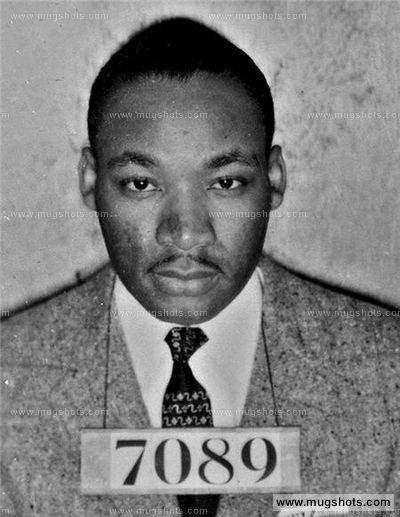
So on this day, when many will be thinking of the triumphant King, the King at the Lincoln Memorial before thousands, the King of the picture at the top of this post, I thought I'd remind us all of the other side of that famous life:


Pax tecum,

RevWik


Thursday, August 22, 2013

Dust in the Wind?

I once read a fascinating, and surprisingly enjoyable, book called:  Humor in the American Pulpit: From George Whitefield Through Henry Ward Beecher.  Sounds a little dry, right?  It isn't.  The book was written by Doug Adams -- not Douglas Adams -- but this guy was a bit of a hoot, too.  I met Doug Adams during my days attending the annual National Clown, Mime, Puppet, and Dance Ministry conferences that were held in Ithaca, NY on the IC campus.  Yes, there really was such a thing and, yes, I really did attend. 

Doug Adams gave really brilliant, engaging presentations.  Another of the things that made him stand out was his habit of wearing what I remember as something like twenty to thirty stoles around his neck pretty much at all times, and before each of his presentations he would open a suitcase he carried with him and take another dozen or two out and hang them wherever he could.  These were really cool stoles, too.  And he did all of this because his wife made them and the money they raised through their sales went to fund a scholarship program.  (Maybe this is why I've taken to collecting stoles?)

Anyway, among other things he did, in this book Doug compared printed and published copies of sermons with people's diary entries.  Back in the day people actually paid such rapt attention to their preachers that they could go home afterward and write the sermon nearly verbatim into their journals.  One of the things he discovered in this comparison was that when Presbyterians published their sermons they were very serious and intellectual, but apparently when they delivered them they actually had a lot of humor and heart in their deliveries.  They seem to have taken this out when they published so as to look more "learned" or something.  Methodists, on the other hand, seem to have actually added humor to their published sermons that hadn't been present in the meeting house!  Given that I have both Presbyterian and Methodist DNA, I found this rather fascinating.

I bring all of this up by way of introduction to this post's point -- to publish or not to publish?  As I noted on Sunday, I had chosen that day not to write out a manuscript for that week's sermon.  I noted that preaching is essentially an aural form -- it is intended to be heard.  The words, in and of themselves, convey only a portion of the message.  Imagine, if you will, the difference between looking at a piece of sheet music and listening to that music played.  A very different emotional experience, no?

I do know that there are folks who really want to chew on the ideas that have been presented of a Sunday, so they want to be able to go back and read the text so that they can really think about it.  I guess you could think of this as someone who's heard a great piece of music wanting to sit down with the sheet music to see how the whole thing really came together and see if what they remember having heard is, in fact, what had been played.  I do understand this desire.

I also know that there are folks who miss a Sunday morning and want to see what all the hubbub was about, or who want to share a sermon with their nephew or someone at work.  And for these reasons, as well as many others, I'm sure, people like to have access to printed manuscripts.

But just because people want something doesn't mean it's good for them.  (Think of our obsession with fast food!)  Here at TJMC we make audio files of all of our sermons available online, so people can go back and listen again -- or share with someone else -- without recourse to publishing a printed version.  In this way we preserve the essential aural nature of the sermonic experience.

And then there's the impact on the preacher.  What does it do to us to know that someone's going to be pouring over our manuscripts?  Might it encourage a focus on the wrong dimensions of our sermon writing?

I'm not at all suggesting that we homileticians should be absolved of the hard work, the hours of preparation, the working to get a phrase just so . . .  But on Sunday I made reference to the Tibetan Buddhist practice of creating intricate sand paintings, only to destroy them almost immediately upon completion.  A reminder of transience, impermanence which, the Buddha said, is the essential nature of reality.  Might this question -- to publish or not to publish -- be seen in that same light?

Pax tecum,

RevWik


Wednesday, August 21, 2013

The Theory of Unintended Consequences

When I preach a sermon I really have no idea what sort of impact it will have.  Sometimes sermons I thought were wonderfully engaging seem to have left people cold, and sometimes sermons I scarcely remember having delivered turn out to have touched people deeply.

The sermon on Sunday seems to have struck a chord.  I have received all sorts of feedback on it.  Including this.  (Thanks, Dick.)

Pax tecum

RevWik

Non Sequitur

Monday, August 19, 2013

In Praise of Curiosity

Yesterday one of my clergy colleagues (and FaceBook friend) encouraged folks he knew to reach out to an FB page called I HATE RELIGION.  He an another colleague/friend had each posted a comment there recently and had been summarily blocked and their comments deleted.  He was suggesting that it'd be great if a bunch of liberal religious folks posted kindly, respectful comments.  My first response was to doubt that there were "ears to hear" there.  But I had a second thought and decided to post this:

Why such anger? Saying "I hate religion" is kind of like saying "I hate music." What kind of music? Jazz? What kind of jazz -- blues, trio, bop, atonal? "Religion" is not one thing. (As is true of atheism, too.). The approach I see here closes more doors than it could possibly open. Why?

I fairly quickly saw this follow-up:

To those who don't get it why I hate religion and nope I don't hate god because he doesn't exist then you should learn what religion does, . . . Erik,you really don't know nothing if you don't get why people should hate religions (as they're all evil and ruin the world) and comparing it to music you only proved how ignorant you,so go learn,. . .,it's obvious why we hate religion,it's not obvious only to idiots and I don't welcome those here.

To which someone else added:

Besides, you're on a page entitled "I hate religion" and upset because someone hates religion!? Should have been prepared for that.

And like others before me, I was blocked.  And, yes, my comment was deleted. 

Truth is, I'm not particularly "upset because someone hates religion."  Heck, there are members of congregations I've served who'd say that they "hate religion" too!  At first I thought that I was "upset" -- and that's not really the right word . . . "dismayed" maybe . . . or "disappointed" . . . or "discouraged" -- because of the anger.  The hatred.  But given that yesterday we'd had a service here at Thomas Jefferson Memorial Church celebrating some of "revelations" of science I've been thinking about this atheistic animosity through that lens. And what I've realized is that I'm disturbed by the closed mindedness.  (The same kind of closed mindedness, I'd argue, that is one of the reasons this person "hates religion.")

What folks like Neil deGrasse Tyson, and Richard Feynman, and Michio Kaku, and Carl Sagan, and Jill Bolte Taylor, and . . . well . . . all of these kinds of folks have in common is an apparently insatiable curiosity.  The best philosophers also have this, and the best artists, and the best religious folks.  And that's something that's sorely missing from folks who "hate religion," or "hate atheists," or "hate gays," or "hate liberals," or "hate conservatives" or any other generalized expression of "us" and "them" thinking.  We are, as noted yesterday, deeply connected to every other person, every other living thing, and every non-living thing too in the universe.  As Neil deGrasse Tyson has said:  "We are all connected -- to each other, biologically; to the earth, chemically; to the rest of the universe, atomically."  To close our minds, then, to anyone or anything, without even entertaining some level of curiosity about it?  That's a sin in my book.  One of the few I could name.


Curiosity my kill cats, but I'm convinced it awakens souls like nothing else.

Pax tecum

RevWik


Sunday, August 18, 2013

A Speck in the Eye of God

My blog post for today will not be the text of my sermon this morning.  If you want to listen to it you can, but there is no manuscript to publish.  One of the primary differences between a sermon and, let's say, and essay is that the later is meant to be read while the former is meant to be heard.  Preaching is an aural form, and while you can certainly read the words that a preacher spoke you cannot really experience the sermon without listening to it.  (And, not to put too fine a point on it, but you really can't experience it fully without actually being in the room as it is spoken -- preaching, done correctly, is a conversational act, despite how one-directional it may seem.)

So like, if I may use a rather grandiose analogy, a Tibetan Buddhist sand painter who carefully prepares to create those elaborate and elegant mandalas and then, when it's been completed, brushes the sand away, I preached today without notes.

Besides, if truth be told, the real sermon was in the pictures and, so, that'll be my blog today.  (Along with some additional information that wasn't in the sermon.)

We started things off with another one of John Boswell's incredible Symphony of Science videos.  This one features Neil deGrasse Tyson, and is called "We Are Stardust:"


Cool, right? 

I love Neil deGrasse Tyson, and I fully agree that it's appropriate that a YouTube video of one of his lectures comes up when you Google "Greatest Sermon Ever."  Yet despite how much I love and admire this man, it was Richard Feynman's contribution that I wanted to focus on.  He's the man who says, "Stand in the middle and enjoy everything both ways -- the tininess of us; the enormity of the universe."  

That brought me to a couple of pictures.

The first was inspired by a quotation of Carl Sagan's:  "One of the great revelations of space exploration is the image of the earth -- finite and lonely -- bearing the entire human species through the ocean of space and time."  (No wonder we'd sung John Mayer's "Blue Boat Home" at the begining of the service!)  So, of course, we looked at that iconic image of the earth:

But with Feynmann in mind we sought a sense of perspective -- the tininess of us and the enormity of the universe.  So we contemplated this image taken by NASA's Cassini spacecraft as it orbited Saturn, looking back at . . . well . . . us.  (That's us above the arrow.)


Wild, right?  So next we took another step on our journey and looked at these two pictures:


The first is an image of the known, observable universe.  For a sense of scale, that's roughly 46 billion light years from side to side, meaning that it'd take you roughly 46 billion years to get from one side to the other . . . if you could travel at the speed of light!  And although that looks extremely congested, remember that the dark spaces are really incomprehensibly far apart.  (And I was informed, via email before the service, that my noted estimate of 100,000 stars in our galaxy and 100,000 galaxies in our universe was grossly low.  The true count is more like 200-400 billion for each!)

The second image, though, is the one that really gets me.  It's not a different angle on the same image, it's something entirely different -- rather than the observable universe, it's the electron cloud inside a hydrogen atom.  And as I said this morning, quoting The Matrix's Oracle, if that doesn't bake your noodle, try these on for size:

Are you beginning to get the idea that the real message of the morning was:  WOW!

We did get a little more speculative:

And I noted that some people might find this a little too "fringe" for their liking.  Too big a leap.  Perhaps skepticism was about to kick in.  And here I'd meant to delve a little bit more into the mystery of the Dogon people who Michelle Ba'th Bates had mentioned in her opening words.  This is an ethnic group from Mali in West Africa who, it is said, demonstrated remarkable knowledge of astronomy -- knowledge that shouldn't have been knowable.  It is said that they had made drawings that included astronomical features that simply aren't visible to the naked eye and which cultures with more advanced sciences only discovered fairly recently.  Most famously they are said to have known for hundreds, maybe even thousands of years that the star we call Sirius A is actually a binary star.  Advanced cosmological computations had postulated the existence of a Sirius B, but it wasn't actually observed until the science of optics had advanced to the point of making a telescope that could see it in the 1970s.

Now, as you can imagine, there are some rather fanciful explanations as to how they could have known this, and there are some equally passionate detractors who are certain not only that the whole thing is a hoax but that they know exactly how it was perpetrated.  To the best of my knowledge, though, neither side has fully adequately proved their point and, so, we may well be left with this mystery.  (Which, as Michelle also noted, goes along with questions about how the pyramids could have built with such precision, how Stonehenge could have been built at all, etc.)  My intention is not to try to convince anyone of any of this but, rather, to simply try to shock us awake to a reality that was perhaps best articulated by scientist and science fiction author Arthur C. Clarke -- "the world is not only more strange than you imagine . . . it's more strange than you can imagine."

And that's really the point of all of this.  I noted that while poets may have said this, and while mystics may have said this, that doesn't necessarily stir the soul of some Unitarian Universalists.  But here are scientists saying it:  we live in an incredibly and constantly amazing universe, and not only do we live in it but it lives in us.  As Neil deGrasse Tyson put it in John Boswell's song --
Look up at the night sky
We are part of that
The universe itself
Exists within us

We are star dust
In the highest exalted way
Called by the universe
Reaching out to the universe

Interconnected web indeed . . .

Pax tecum,

RevWik
 

Tuesday, August 13, 2013

To Be(lieve) or Not To Be(lieve)

One of the most challenging parts of being a parish minister is weighing requests for assistance from folks who aren't a part of the congregation.  People come to churches because they know that here will be people who care; people come to churches because they know that they're generally "a soft touch."  There are people who come desperate; there are people who come deviously.  But they come.

When I was an intern in Concord, Massachusetts I was introduced to the system they had developed.  No congregation gave out financial assistance.  None.  But all of the faith communities in town donated toward a common fund . . . which was administered by the police department.  If someone came to a church and asked for money the staff person or volunteer who met them would explain that there was no money in the church to give out, but that they'd be very happy to call ahead to the police station to say that someone was coming who was in need.  They'd even offer to drive them if getting there would prove to be a problem.  Over the years that this system has been in place a fair proportion of folks who'd come asking for help never made it to the police department.  It seems that people who have no problem scamming a church are less inclined to scam the police.

We don't have such a system here -- and haven't in any of the other communities in which I've ministered.  But here we do have an organization called "Love INC" (Love in the Name of Christ) which, among other things, does help connect one lonely outpost of caring to another.  If someone has been making the rounds, or making trouble, Love INC sends out a bulletin to let other churches know.

Still, the decision to help or not to help someone is a difficult one.  Even when Love INC has noted that someone has given other congregations a hard time, or seems to be trying to scam the system, it can be hard to sit with someone, hear their story (even if it is only a story), and turn them away unhelped.  I've done it, but it's never easy.

There is a man who comes to the congregation I serve with some regularity.  He's homeless.  He served some time in prison.  And as a homeless man with a felony record -- who also happens to be African American -- he's got multiple decks stacked against him.  And, yes, I've been warned that he's a guy who's up to no good.  But I like him.  I've gotten a good feeling about him.

Today he called and asked if I could help him out.  He needed some money to pay back the bail bondsman or else he could get picked up and put back in jail.  I've helped him before.  He even stored his things in my office for a while the last time he was on the street.  And, so, the question was not just, "do I help this person?" but, "do I help this person again?"

I decided to.  Thinking about my sermon about the Good Samaritan a couple of weeks back I found myself asking not "what might happen to me if I do?" but "what might happen to him if I don't?"  Besides, as I said, I like this man and have had a sense of his inherent goodness.  So i called the bail bond company.  The woman who answered the phone seemed relieved.  She said that she'd lent him the money for bail a couple of weeks ago because she'd had a good feeling about him, had sense that he was a good person and sincerely wanted to try to work things out.  But as the days became weeks without hearing back from him she began to worry.  "I'm so glad that someone else saw in him what I saw in him," she said.  So was I.

I've said it before, and I'll no doubt say it again.  I would much rather be made a fool by believing in someone who doesn't deserve it than to be made mean by not believing someone who does.

Pax tecum,

RevWik

Monday, August 12, 2013

What's In A Mane?

When I was growing up in the 70s and early 80s I worship at the altar of the long locks.  My dream was to attain the status of "long-haired hippie freak." And I did pretty good with it.

One summer when I was working at Camp Epworth -- a United Methodist Camp in High Falls, New York -- my friend Jimbo cut his hair.  He'd also been a long-haired kind of guy, but he came back to camp one evening having gotten himself a rather conservative cut.  He declared that no one would ever make a more drastic change than he had.

I took the dare.

To be fair, I made my decision scientifically.  I polled the rest of the staff, asking if I should cut off all of my hair.  The results were, numerically, pretty evenly split, but the enthusiasm was all on the shearing side.  And so, with a couple of those arts and crafts safety scissors and a bag of disposable razors, I went bald.  And I actually kind of enjoyed it.  And thus began my literal on-again, off-again relationship with my hair.

I've tended toward keeping it long -- and my wife particularly likes it when I've got a MacGyver-esque mullet -- but I've been shorn, too.  When I went before the Ministerial Fellowship Committee I was asked if my long hair was some kind of statement and if I'd be willing to cut it more conservatively if long locks got in the way of my ministry.  In fact, just a few short months later I asked my Internship Committee whether they thought my appearance was hindering my effectiveness.  To a person they said that they didn't personally have any problem with how I looked but that they thought there might be people in the congregation who did.  I cut my hair.

It was very short when I came to the Thomas Jefferson Memorial Church, although I was sporting a pretty big beard at the time.  In the last couple of years I'd started letting my hair grow out again.  But a couple of months ago I cut everything back.  I buzzed my hair and shaved off my beard (something I hadn't done in over twenty years).  You can imagine that folks here had all sorts of reactions.

During the month of July -- which I'd taken off for a combination of vacation and study leave -- I've allowed my hair to grow back some.  I have a goatee now, which my wife had said she'd never want but which she allows looks good on me.  And now that I'm back at church, people are having all sorts of other reactions.

Recently I had several people on the same day say essentially the same thing -- "this looks more like you."  Yesterday,  my friend and colleague the Rev. Tony Perrino delivered a wonderful sermon about being "nobody but yourself."  And that got me to thinking about people's reactions to my appearance.  Isn't it interesting that the way we look can get so wrapped up in people's thinking with what they think of us?

I was going to write, ". . . with how they see us" and realized that that's a big part of it.  We do judge books by their covers or, at least, we connect with those covers.  (I recently bought a new edition of that Herman Hesse classic Narcissus and Goldmund and was disappointed that the cover art had changed from the one I'd had as a kid.)  And how easy it is to go from judging a book, in part at least, by its cover and prejudging something (or someone) by its appearance.

Nothing profound today.  Just some musings.

Pax tecum,

RevWik


"Oh say, can you see my eyes?  If you can, then my hair's too short!"

Friday, August 09, 2013

Musings on Marriage

It's an odd thing . . .

Tomorrow I get to officiate the wedding of two members of the church I'm serving, two colleagues (well, one colleague and one in training), and two friends . . . all in the same day.  But that's not what's so odd.  It's odd that I have anything to do with it.

I'm told that in the Catholic tradition the only one of the seven sacraments the priest does not perform is the sacrament of marriage.  That, it's been explained to me, can only be performed by the couple themselves.  The priest is merely a witness.

So it is, I believe, in my tradition as well.  Most often, in my experience at least, the wedding is not the beginning of their relationship.  I once officiated at the wedding of a couple who'd lived together for 17 years!!!  During that time they'd raised children, faced good times, and bad.  Certainly their wedding day was not the beginning of their commitment to one another.  And, so, whatever it was that made of them a married couple, it wasn't that a religious figures "solemnized" their "nuptials."

Or consider same sex couples.  In many states -- including my new home of Virginia -- two people of the same gender are not allowed to have someone solemnize their nuptials.  There is no priest or rabbi or imam to bless their union.  And yet I can attest that many of my gay and lesbian friends are just as "married" as any of the straight people I know.

And then, of course, there are myriad of examples of heterosexual marriages that are full of abuse, and infidelity, and disrespect, and which certainly seem to me to be anything but a "marriage."

So what is it that makes a couple "married"?  Simply put, it's their love.  Tomorrow I will describe marriage as "an institution founded in nature, ordained by the state, sanctioned by the church, and made honorable by the faithful keeping of good women and men in all ages."   Truth be told, though, it's all about the love that two people have for each other.  Jamie and Pam will be married because they are making of their lives a committed union, not because of the words said, or the place in which they were said, nor the person (and persons) looking on as they say them.

I do not understand why some people can't understand that the gender of the two people really doesn't matter.  I mean, I actually do understand why some folks think that.  What I don't understand is why they aren't able to see that they're wrong.

Some day they will.  Some day our children will look back and wonder at the prohibitions against same sex marriage the way we look back at the prohibitions against mixed race marriage.  When I began my ministry there was no state in which homosexuals had the same legal right to marry as their heterosexual neighbors.  Now I have to write, "In many states . . ." because now there are states that have come to see the light.  I feel certain, now, that I will live to see this change.

Pax tecum

RevWik


Thursday, August 08, 2013

Study Leave Book Reports, part 3

I know many people who frequently have two or more books open at the same time.  I think I even used to be able to do that (if I could it was so long that I can't remember for sure now).  All I know is that I generally don't do that now.  I like to read one book, focus on it, until it's done and only then move on to something else.

But last month while I was on Study Leave I had two books both calling out to me with such equal passion that I couldn't choose between them.  And since they are actually quite related to one another, I decided to give it a try.

I need to say that I am a fan of St. Francis of Assisi.  I would like to be able to say that I am a disciple, but I'm not (yet?) that disciplined.  But I have been studying his life, his teachings, and his legacy fairly seriously for the past couple of years, and I've even been involved with a group called The Ecumenical Order of Saint Francis (an ecumenical "third order" monastic community).  So I knew that I wanted to do some more reading about Francis during this time.

The first book I picked up -- and I'd been waiting to dive into this for some time -- is a classic:   Leonardo Boff's Francis of Assisi:  a model for human liberation.  I hadn't known that Boff was a Franciscan himself but he knew him as one of the premier liberation theologians, so I was eager to get his take on the "poverello."  This book was originally published in Boff's native Brazil in 1981, and I was reading an updated twenty-fifth anniversary edition published in 2006.  (Throughout I found myself wondering what Boff would say about direction the new Pope Francis seems to be taking the church.)  Boff lifts up Francis as an example of a joyful Christianity, an exemplar of a path that focuses on the poor in a radical way, and that shines a new light on humanity's interrelationship with the rest of the natural world.  It is clear that Francis has earned both Boff's personal affection and theological respect.

The second is titled Saint Francis and the Foolishness of God.  It is, itself, written by an ecumenical team:  Marie Dennis, Cynthia Moe-Lobeda, Joseph Nangle, and Stuart Taylor.  This is in many ways a more personal book or, to put it another way, a book that aims to help individuals bring the lessons of Francis into their own personal lives.  It can be read as a book study (and I'm thinking of using it at TJMC sometime in the future), or as a personal meditation, but either way it seems to be perfectly in keeping with what I understand to have been among Francis' own last words, "I have done what Christ called me to do; go and do what Christ is calling you to do."  The "Franciscan Way" is not about slavishly reproducing the actions and behaviors of Francis, but of bringing his way of life into reality within the reality of our own.  (Which, of course, can be said of Christianity in general.)

I will confess that I found Boff's book tough going at first. It's been a while since I've read any really dense, "heady" material. As I read on, though, and especially as I did so alternating with my second book, I found many things coming together for me.  (One thing I'll lift up is my delighted surprise as seeing Francis' way described as one which brought clergy and laity together in radically new ways that equalized them in the Order.  In fact, the earliest Franciscans were, by and large, not ordained priests, as Francis himself was not, and so in many ways it is a lay movement!  Considering my own current efforts at this same project it's nice to see that I'm on track.)

Pax tecum,

RevWik

Wednesday, August 07, 2013

International Dance Between the Towers Day 2013

A few years back I decided to declare a national, an international holiday!  I called it:  International Philippe Petit Danced Between The Towers Day.  It celebrates one of our history's greatest acts of holy folly -- on August 7, 1974 the French street performer and wire walker Philippe Petit stepped out onto a wire that had been surreptitiously rigged over the preceding night between the two towers of the World Trade Center in New York City and proceeded to "dance" between them for approximately 45 minutes.

I was twelve years old at the time, and the idea of this was electrifying.  A few years ago a documentary film about "le coup" -- Man on Wire -- came out and recaptured my imagination. (It also captured the Best Documentary Oscar in 2008.)  My annual ritual of watching that film began, and the declaration of IPPDBTTD was born.

In June, Nik Wallenda of the famous Flying Wallenda's family got people talking about perilous promenades when he walked a tightrope across the Grand Canyon.  Petit's accomplishment was naturally resurrected in people's minds, not least because he had considered following up his New York City crossings by crossing this same spot of the Canyon.  (Wallenda even had to remove the rigging Petit had been experimenting with.)  Still, for me, the events of August 7th still hold a unique place.  Why?

Well, firstly, it was such a surprise.  Following on their conquest of the Cathedral of Notre Dame in France and the Sydney Harbor Bridge in Australia, Petit and his companions prepared the Towers walk in secret, in the middle of the night.  (And for months prior.)  They did not have permits or approval.  They did not hold a press conference in advance to make sure the media were all there.  They didn't know if anyone would see them.  In a very real sense it seems to me that they didn't do this for anyone else -- they did this for themselves.  The did this to have done this.  Or, more precisely, they did it to do it.  Present tense.

And this added another element of risk.  Preparations had to be done in secret, which means that the team was limited in its ability to have their ideas tested.  And if you've read the book or seen the movie it is astonishing clear in how many ways le coup nearly didn't happen!  So many things could have gone wrong, almost did go wrong, that it's even more amazing than on face value that the whole thing worked.

One of the other things about that 1974 walk is that it was such a collaborative effort.  This seemed readily apparent to me watching the movie.  Although there's no question that it is presented as Petit's achievement and Petit's dream, it also seems unambiguously clear to me that there is no possible way he could have carried it out on his own.  This was brought home even more powerfully for me last year when I reached out to one of his co-conspirators -- Jean-Louis Blondeau -- because I wanted to use one of his black and white photos of Petit in his street performing days  for my blog post for IPPDBTTD.  To my tremendous pleasure he said that I could, and the two of us corresponded for a little while.  (I plan to send him a link to this piece and wish him a "happy anniversary.")


While those who made the walk possible did in many ways find themselves in the shadows of the spotlight that fell on Petit, that in no way diminishes their have been co-creators of that morning's magic.

Today, on what I now think of as International Dance Between the Towers Day, I am so grateful for all of those who were dreamers of this dream, and all of those who made it come true for the rest of us.  Jean-Louis said to me that there's another, in some ways even larger and more true story of that famous walk than the one I'll be watching tonight.  I hope that that story gets told.

Pax tecum,

RevWik

Study Leave Book Reports, part 2

I mentioned yesterday that I'd done a lot of exciting reading this past month.  This is the book I started with -- Robin Meyers' The Underground Church:  Reclaiming the Subversive Way of Jesus.  Meyers is "a nationally known United Church of Christ minister and peace activist.  His congregation describes itself as unapologetically Christian and unapologetically liberal."  Rev. Meyers certainly seems to be both.  He also come across as someone who sees an alternative to things as they are.  An example:
"Most of our churches are friendly, comfortable, and well appointed.  But who goes there expecting to be 'undone'?  Who expects to weep at recognizing the world as it really is, or to shudder at the certain knowledge that until we start taking risks it is likely to stay that way?  Who demands that worship should peel back the stupefying crust of a frantic, franchised culture?  Who suggests that perhaps we should plan an attack on the mall that rivals the ferocity with which Jesus attacked the temple?  Who dares to be a fanatic these days for something other than a football team?"  (p. 4)
 
I like this guy.

He makes the point early on -- and this is my wording of his ideas -- is that those who get focused on a search for the historical Jesus are doing something interesting, but that what is really essential for the church to do is to examine what the historical Jesus community was like.  What did the earliest followers of "The Way" consider important?  What did they do?  How did they strive to manifest among themselves and in the world the experience(s) they'd had while walking with this historical Jesus, and in the days, months, and years after his death?

One of the most important characteristics he lifts up -- and he does a really superb job of lifting up some pretty challenging things! -- is that the early proto-Christian communities were radically counter culteral.  They were considered, not to put too fine a point on it, a real threat to the status quo.  It's been noted often by liberal scholars that Jesus' talk about the "Kingdom of God" would have been understood by those listening as an articulation of an alternative to the "Kingdom of Caesar."  The early community of The Way existed in opposition to the way things were, as was Jesus himself.

So when, Meyers asks, was the last time that someone considered it dangerous that the church exists?  Obviously some of us in the liberal/progressive wing of religion often feel that some of the things said and done by the conservative wing are dangerous.  But when was the last time our own religiosity a challenge to the status quo?  When was your own faith -- however you understand it -- such a conterpoint to the assumed cultural norms that other people took notice?

If you're like most folk, it's probably been a while.  Unitarian Universalists have often experienced their faith as a kind of challenge to the established norms when transitioning from other faith traditions to ours -- family members or friends warn that we're a cult, or not a real religion, or a gateway straight to hell.  But once here, does the way we do our religion challenge -- or support -- the systems that are making such a hell here on earth?

That, fundamentally, is the encouragement I found in The Underground Church -- the encouragement to rediscover the essentially subversive nature of religion.  This is a book I'll come back to.

Pax tecum,

RevWik

Tuesday, August 06, 2013

It's Nice to Be Back!

The month of July was, for me, a month away from the ordinary.  For the first two weeks my family and I were on vacation.  (A friend of mine likes to note that there's a difference between a "a family trip" and "a vacation."  To be honest, this was a bit of both.

The rest of the month my time was split between moving -- a local move to a great house closer-in to town -- and what is usually called "study time."  The first half of that split I would wish on no one.  Because it was a local move we decided to move everything we could by ourselves, and to do it a bit at a time.  That means that literally every day of the last two-and-a-half weeks of July was spent packing up boxes at one house, loading them into the car, driving to the other house, and unloading them into the new house's garage.  Heft, sweat, repeat.  I wouldn't wish that on anyone.

That second half, though -- the study time -- now that was wonderful.  I read a number of really exciting books and really good some much needed stimulation of the grey cells.  I will, over the next few days, write a bit about each of them, but I thought I'd start with the most recent.  In fact, I'm currently only about halfway through it:

The Blogging Church:  sharing the story of your church through blogs, by Brian Bailey and Terry Storch.  I have to say, I'm really enjoying it.  It is written by a couple of guys who are unabashedly evangelistic about both the church and the technology of blogging.  I've gotten a lot of ideas not only for improving A Minister's Musings, but also for possibly introducing blogging as a response (only one response, to be sure) to the perennial problem of communicating within and beyond the congregation.

Might this provide a way to make communicating not only the factoidal information that we seem always to need to broadcast, but also the ideas and even the "feel" of the community?  Would this provide a platform for two-way, conversational communication rather than the more traditional one-way delivery?  And would this be more compelling for people?  (In other words, might this to at least some extent address the problem of folks feeling overwhelmed by information in their in-boxes -- offering a new and more engaging way to keep connected?)

The authors not only share their own quite obvious enthusiasm and experience, but that of other folks who've been involved in the blogosphere for some time.  I think that there's a lot to learn here, and as I learn I am becoming increasingly intrigued by the possibilities being presented.  Oh, it's nice to be back in the saddle again.

Pax tecum,

RevWik